
Keynote Speakers

Nimrod Barshad
Sculptor, Conceptual Artist
Nimrod Barshad
Painter, Conceptual Artist
Tommy Martinez
Painter, Conceptual Artist

Vehicular Edge Services

The rise of Autonomous and Connected Vehicles (AVs and CVs) has created a need for innovative edge computing solutions to meet their growing demands and leverage their computational power. By utilizing the unused resources of these vehicles, we can offload intensive tasks for parallel processing at the extreme edge, drastically reducing latency. However, since AVs and CVs are user-owned and highly dynamic, their availability can be intermittent, leading to uncertainty and impacting Quality of Service (QoS). To tackle this, we predict vehicle availability to adapt to the dynamic nature of vehicular edge computing and integrate these predictions into resource allocation. We also enhance reliability by developing a reputation scoring system that assesses vehicle reliability based on past performance, allowing for proactive task replication. Additionally, we address the growing demands of AVs and CVs by enabling quality-aware offloading of tasks related to cooperative perception, improving traffic situational awareness. By minimizing perception redundancy and maximizing the Value of Information (VOI), our strategies improve road safety, traffic management, and the overall driving experience in intelligent transportation systems.

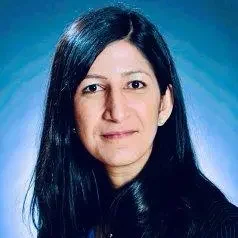
Dr. Hossam Hassanein

Professor and Director, School of Computing, Queen's University, Kingston, Ontario, Canada
From Roads to Air Corridors: Connectivity and Intelligence as Safety-Critical Infrastructure in Urban Air Mobility

Urban Air Mobility (UAM) is often presented as a breakthrough in aircraft design, yet history shows that new transport modes succeed or fail not because vehicles can move, but because cities can manage them safely, reliably, and at scale. From railways to metros and highways, mobility progress has always depended on invisible control systems that regulate flows, prevent conflicts, and build public trust.

This keynote reframes Urban Air Mobility as a mobility system challenge, not an aviation novelty. It argues that the defining question for UAM is not whether electric vertical aircraft can fly, but how can we envision a new three-dimensional layer of mobility traffic. Issues of capacity, safety, integration becomes very important.

The talk explores how AI-driven coordination and digital connectivity are becoming the functional equivalent of traffic signals, rail signaling, and air traffic control-only now operating in dense, low-altitude urban environments.
Ultimately, the talk invites a reflection on how can Urban Air Mobility become predictable, integrated, and “boring enough” to earn a permanent place in the urban transport ecosystem.

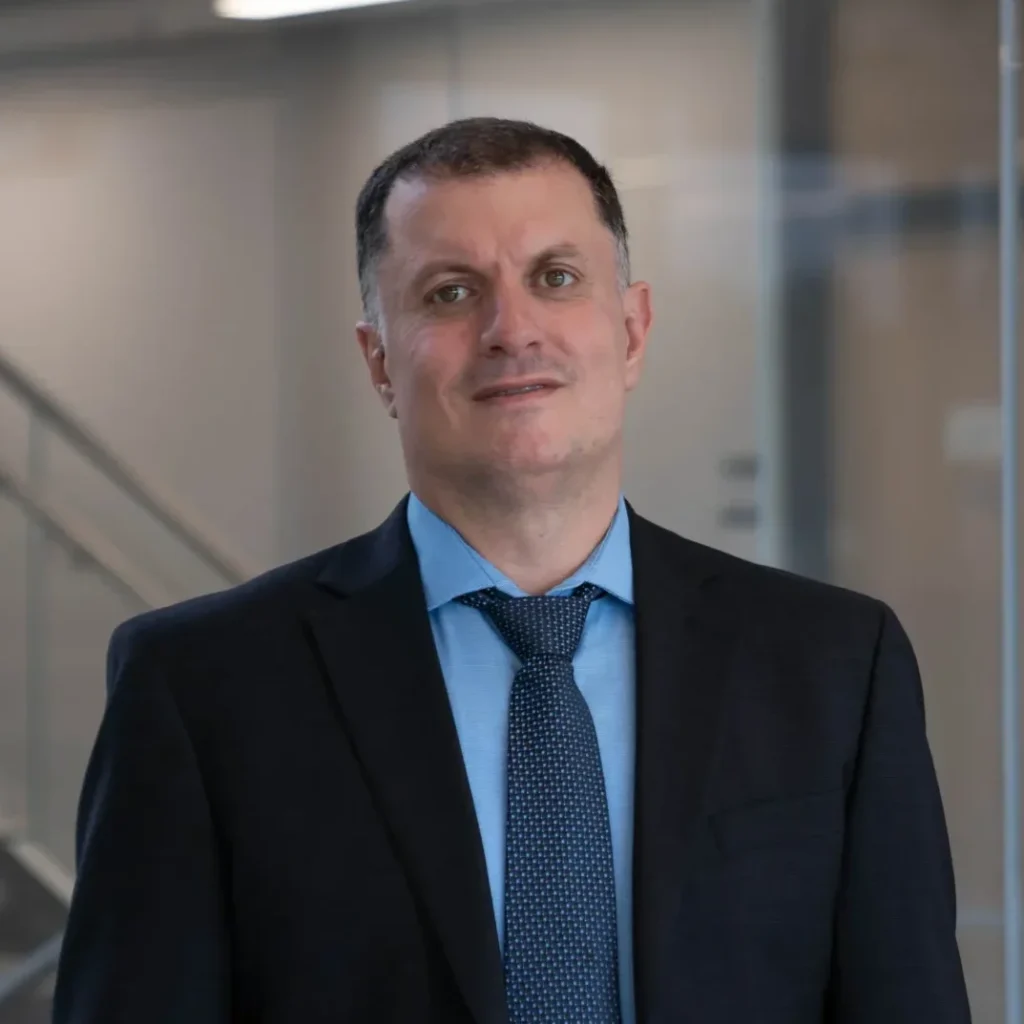
Dr. Soumaya Cherkaoui

Full Professor, Department of Computer Engineering and Software Engineering, Polytechnique Montréal, Canada

Road traffic modelling and control with physics-informed data-based techniques

The presentation explores the ongoing paradigm shift in road traffic modelling and control, from traditional physics-based approaches to modern data-driven and machine learning methodologies. While data-driven techniques offer unprecedented opportunities to exploit the growing availability of traffic data, their effective integration into control-oriented frameworks remains a key challenge. The talk presents a unifying perspective in which physical insight and domain knowledge are combined with data-driven learning, giving rise to physics-informed machine learning approaches tailored to traffic systems. Within this framework, new modelling and control strategies for road traffic networks are discussed, highlighting how the synergy between physics-based and data-driven methods can improve both performance and interpretability. The proposed approach is illustrated through results obtained on multiple real-world datasets and is critically compared with purely physics-based and purely data-driven solutions. The plenary concludes by outlining open challenges and future research directions for the development of robust, scalable, and data-efficient traffic control systems.

Dr. Simona Sacone

Department of Informatics, Bioengineering, Robotics and Systems Engineering University of Genova, Italy
Panel Title: Engineering and Societal Adoption Challenges of Automated Driving Systems
IEEE International Conference on Smart Mobility (IEEESM)
Across the globe, there are tens of companies pursuing the development of automated driving systems (ADS), ranging over SAE Driving Automation Levels 3-5. There are several open engineering challenges of ADS software – particularly in development and validation of ADS operation in challenging weather conditions, critical corner cases, dealing with a variety of pedestrians and traffic conditions, and cooperation with human operated vehicles. Many standards (e.g., ISO 26262, ISO 21448) are emerging providing guidelines to ensure safety of ADS under the intended operating conditions. On the other hand, there are societal concerns that technological advancements such as ADS and robotics might bring in, e.g., people being out of work, competing with automation etc.. Initiatives like Partners for Automated Vehicle Education (PAVE) aim to alleviate such concerns by educating public and policymakers on pros and cons of automated driving systems. This panel discussion will focus on ADS engineering and societal adoption challenges and offer some possible solutions.
Ramesh S Senior Technical Fellow, General Motors, USA
Panel Moderator
Arun Adiththan Senior Researcher, General Motors, USA
Panel Moderator
Panel Description
Overlay Image
Panel Title: Engineering and Societal Adoption Challenges of Automated Driving Systems
IEEE International Conference on Smart Mobility (IEEESM)
Across the globe, there are tens of companies pursuing the development of automated driving systems (ADS), ranging over SAE Driving Automation Levels 3-5. There are several open engineering challenges of ADS software – particularly in development and validation of ADS operation in challenging weather conditions, critical corner cases, dealing with a variety of pedestrians and traffic conditions, and cooperation with human operated vehicles. Many standards (e.g., ISO 26262, ISO 21448) are emerging providing guidelines to ensure safety of ADS under the intended operating conditions. On the other hand, there are societal concerns that technological advancements such as ADS and robotics might bring in, e.g., people being out of work, competing with automation etc.. Initiatives like Partners for Automated Vehicle Education (PAVE) aim to alleviate such concerns by educating public and policymakers on pros and cons of automated driving systems. This panel discussion will focus on ADS engineering and societal adoption challenges and offer some possible solutions.
Ramesh S Senior Technical Fellow, General Motors, USA
Arun Adiththan Senior Researcher, General Motors, USA
Panel Moderator
Panel Description
Panel Moderator
Overlay Image